
Zanzibar is filled with historic places that reveal its cultural past. Exploring the island’s ancient sites is easiest when you rent a car. Driving helps you reach city landmarks and coastal ruins that are far from common tour paths. Many of these sites date back to the rule of the Sultans of Oman, particularly Sultan Barghash bin Said and Sultan Said, who significantly influenced Zanzibar’s early development. In this guide, we will take you through the top six ruin sites and explain how you can reach each by car.
These ancient sites in Zanzibar offer travellers a glimpse into Zanzibar’s history, the Sultans of Oman, and the people who once inhabited this region.
Maruhubi Palace is situated approximately 4 kilometres north of Stone Town, a 10-minute drive away. Sultan Barghash built it between 1880 and 1882 as a seaside palace for his wife and his large harem. A fire in 1899 destroyed most of the complex, but the tall stone pillars and the remains of the Persian bathhouse can still be seen. The palace once had high walls, exotic gardens, and more than 100 concubines living on the grounds. Sultan Barghash brought mango trees from India, and those old trees still give shade today. Walking through the lily pools, crumbling arches, and the ruined bathhouse helps you picture how the Sultan’s harem once lived here.
Driving to Maruhubi
Heading north from Stone Town, follow Malawi Road (also called Nyerere Road) along the coast. The drive is only about 10 minutes. You’ll pass local neighborhoods before spotting a sign for Maruhubi Historical Site. There is a small parking area by the entrance. The site is usually open to visitors for a small fee. You can visit in the cooler morning hours and avoid tour crowds. After exploring, it’s easy to continue north to the next ruin or circle back to Stone Town for lunch.
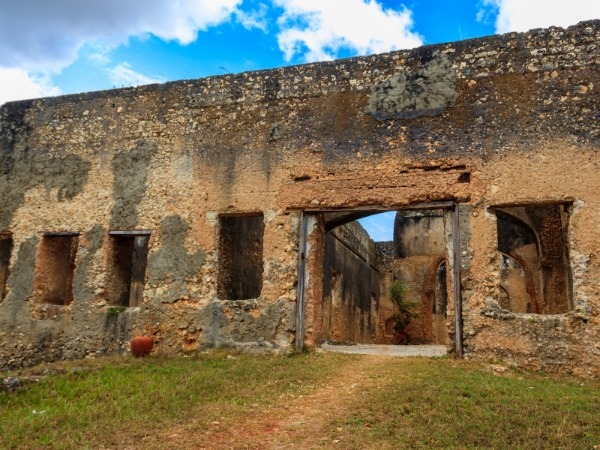
Mtoni is the oldest palace in Zanzibar. It is located approximately 5 kilometres north of Stone Town, a 15-minute drive along the coast. Sultan Said built it between 1828 and 1834, and more than 1,000 people once lived here at the royal court. Today, the complex is mostly crumbling walls and arches. Mtoni Palace became Sultan Seyyid Said’s main residence after he moved his capital from Oman to Zanzibar.
In its active years, the palace was like a small city. Gazelles and peacocks roamed the large courtyard, and the royal family used several private bathhouses. Princess Salme, one of the Sultan’s daughters, was born here and later wrote memoirs that describe daily life in these halls. The palace once had many rooms, long verandas with colonnades, and an aqueduct that carried fresh water from an inland spring. By 1885, the palace had been abandoned and left to ruin. Today, you can see moss-covered coral-stone walls, the remains of a keyhole-shaped pool, and what is left of a tower where the Sultan watched ships at sea. Despite the decay, the size of Mtoni still shows why visitors once saw it as half castle and half French château.
Driving to Mtoni
From Stone Town, drive north past Maruhubi along the main coast road (Malawi Road/Bububu Road). The Mtoni Palace Ruins are approximately 5 to 6 kilometres away, located just beyond Maruhubi. Look for a turn-off near a hotel. The ruins are situated by the shore, next to the hotel grounds. It’s advisable to go with a guide at Mtoni. A local caretaker can guide you around for a small fee and tell fascinating stories. There is a parking spot near the entrance. With a rental car, you can also combine Mtoni with nearby sites. Maruhubi is on the way, and other palace ruins are further north.
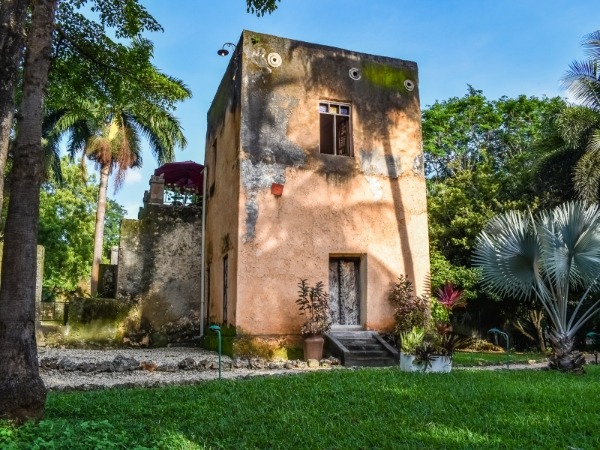
The Mbweni Ruins are located approximately 5 to 6 kilometres south of Stone Town, a quick 15-minute drive from the city center. This site is the remains of St. Mary’s School, established by missionaries in the late 19th century. Today, the ruins are in tropical gardens by the sea, next to a small resort. In the 1870s, British missionaries built a refuge and school at Mbweni for young women. Dozens of girls rescued were brought here to be educated in reading, sewing, cooking, and other skills so they could rebuild their lives. The site included a large two-storey dormitory, classrooms, and even a chapel.
By 1906, the school had become a convent run by Anglican nuns. Over time, the buildings deteriorated. The roofs collapsed, and nature took over the brick walls. In recent years, the property has been revived as an eco-friendly lodge with a botanical garden. You can wander through the vine-covered ruins of the old school, surrounded by bougainvillea and palm trees. The stone walls of the chapel still stand tall and occasionally host events. It’s a popular spot for romantic weddings and yoga sessions.
Driving to Mbweni
Head south from Stone Town on Nyerere Road, which leads toward the airport. Mbweni is on the southwestern coast, just beyond the airport turn-off. The drive is straightforward, about 6 kilometres on a paved road. There is parking at the lodge, and visitors are usually welcome to explore the gardens and ruins if they patronize the café or bar. Driving gives you the flexibility to continue further south to visit local villages or beaches after seeing Mbweni.
The Fukuchani Ruins are located on Zanzibar’s far northwest coast, about 39 kilometres from Stone Town. The drive takes approximately 1 hour on the main road leading to Nungwi. This 16th-century site features the remains of a fortified house known as the Portuguese House, as well as a nearby coral cave with a clear freshwater pool. Fukuchani village once stood on the edge of both Portuguese and Swahili influence. The ruins feature stone foundations and coral-rag walls dating back to the 1500s. Many experts believe that the Swahili people built the house, but Portuguese styles also influenced its design.
The pointed stone arches, an enclosed courtyard, and narrow gun slits for muskets, show that the home was fortified. The house likely had a thatched roof held up by four central pillars, and the bases of these pillars are still visible today. Low perimeter walls surround the site and may have marked the property or protected livestock. A short walk from the house leads to Fukuchani Cave, a limestone chamber featuring a freshwater pool. Local stories claim the Portuguese used this hidden pool as a private bath or as a water source. Visiting Fukuchani offers a glimpse into daily life from past centuries. It has no royal features, but it remains one of the most interesting ancient sites in Zanzibar.
Driving to Fukuchani
From Stone Town, take the main North Road through villages like Mkwajuni as you head toward Nungwi. The drive is about 39 kilometres on a paved road, passing spice farms and the occasional baobab tree. After roughly an hour, you’ll reach Fukuchani village. There is a small sign on the west side of the road indicating the turn-off for the ruins and cave. The last stretch may be a dirt track, so drive slowly. After visiting Fukuchani, you can continue north to enjoy Nungwi’s beaches or head east to other northern sites.
Chuini Palace is about 10 to 12 kilometres north of Stone Town, which is a 20-minute drive along the west coast. Sultan Barghash built it in 1873 as a luxurious seaside palace with one of the first running water systems in Zanzibar. A large fire in 1914 destroyed most of the complex, but parts of the aqueduct, the bathhouses, and several strong walls still stand today.
“Chuini” means “place of the leopard” in Kiswahili. The palace showed the Sultan’s desire for modern design and new ideas. Engineers used the nearby creek and tidal flow to move seawater into the palace through iron pipes and pillars. This system likely provided baths and early plumbing, a major innovation at the time. The palace sat on a raised terrace facing the sea, and just north of it, the Sultan built a steam-powered sugar factory. Its tall brick chimney still rises above the landscape as a historic marker.
The fire in 1914 left Chuini in ruins, but the site remains atmospheric. Coral-rag walls, arches, and parts of the old aqueduct surround you as palm trees and wild grasses grow between them. You can picture the Sultan enjoying cool breezes here more than a century ago, making Chuini one of the most captivating historic places in Zanzibar.
Driving to Chuini
Take the main road north from Stone Town (the same route as towards Bububu). After about 10 kilometres, near Chuini village, you’ll find Chuini Palace Ruins close to the shoreline. The ruins are actually on private land, now adjacent to a lodge. If you are not a guest, you should ask permission at the lodge to visit the ruins. They are usually accommodating to polite visitors, especially if you stop for a drink or meal at their restaurant.
Parking is available at the lodge. Driving there is worthwhile, as you can also explore the views of the Indian Ocean. You can combine this trip with a visit to the Bububu dhow workshop. Visiting in the late afternoon is recommended. The sunlight on the ruins is golden, and you could stay for sunset at the lodge’s beach after exploring the palace.
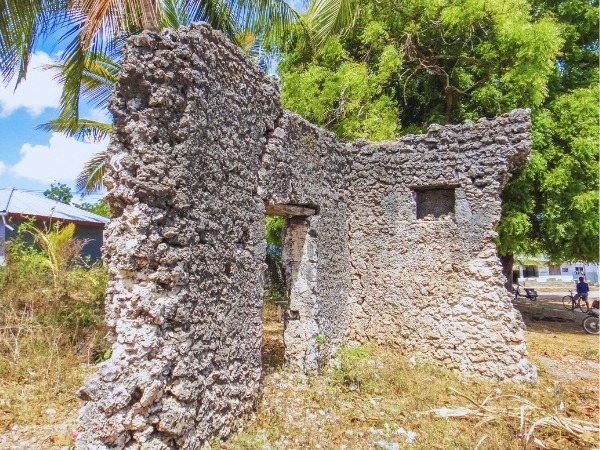
Kizimkazi Dimbani Mosque is located at the far southern tip of Zanzibar. It was built around 1107 AD and is one of the oldest Islamic buildings in East Africa. The mosque is known for its 12th-century Persian inscriptions and coral-stone design. It is situated approximately 60 kilometres from Stone Town, a 1- to 1.5-hour drive through the centre of Unguja Island to the fishing village of Kizimkazi.
Visiting the Kizimkazi Old Mosque feels like stepping back almost 1,000 years. An inscription in Kufic script above the mihrab shows that settlers from Shiraz, Persia, built the mosque in 1107 CE. This makes it an ancient site from the early Swahili period. The mosque was made of coral rock and lime mortar, and had no minaret. It was rebuilt between 1772 and 1773, which explains why much of the current structure reflects 18th-century Swahili-Islamic design.
Even so, many original parts remain. The foundation, several interior pillars, and the carved Kufic decorations still belong to the 12th century. Old tombs from the 1600s surround the mosque, adding to the historic atmosphere. The mosque is still active today. Visitors may enter outside of prayer times if they are dressed modestly. Inside, you can see the original mihrab and picture the many generations who prayed here. Standing in this simple coral-stone structure, in a quiet coastal village, gives you a rare view of one of the most important ancient sites in Zanzibar.
Driving to Kizimkazi
The journey from Stone Town to Kizimkazi (Dimbani) takes you through the island’s scenic interior and down to the south coast. It’s approximately 58 to 60 kilometres. You’ll drive south-east on the highway towards Jozani Forest, then turn south-west following signs for Kizimkazi. The roads are paved most of the way; the last few kilometers branch off to the village on a narrower tarmac road.
The mosque is situated a short walk inland from the beach, shaded by old mango trees. You can park near the village center or by the beach and walk a couple of minutes to the mosque. As this is an active religious site, consider hiring a local guide in the village; they can liaise with the mosque’s caretaker to arrange access for you. With a car, you can explore more around Kizimkazi. Many visitors also take a dolphin-spotting boat trip from the nearby Kizimkazi Mkunguni beach.
Exploring ruins in Zanzibar by car is a rewarding adventure that combines history, culture, and scenic drives. You’ll move from the narrow streets of Stone Town to open coastal roads and village lanes, discovering how each site has its own story. Start early in the day to beat the heat and to have more daylight for visiting multiple spots. Most of these ruins have local caretakers or guides, and engaging with them supports the community and enriches your understanding of each location.
Rent a car in Zanzibar with Final Rentals to make your trip smoother. You can pick up your vehicle at Abeid Amani Karume International Airport. Choose a car that fits your needs, and receive instant confirmation with no hidden fees. Final Rentals offers affordable rates, flexible cancellation, and 24/7 service at Zanzibar Airport. For extra convenience, you can also download the Final Rentals app on Google Play and the App Store.